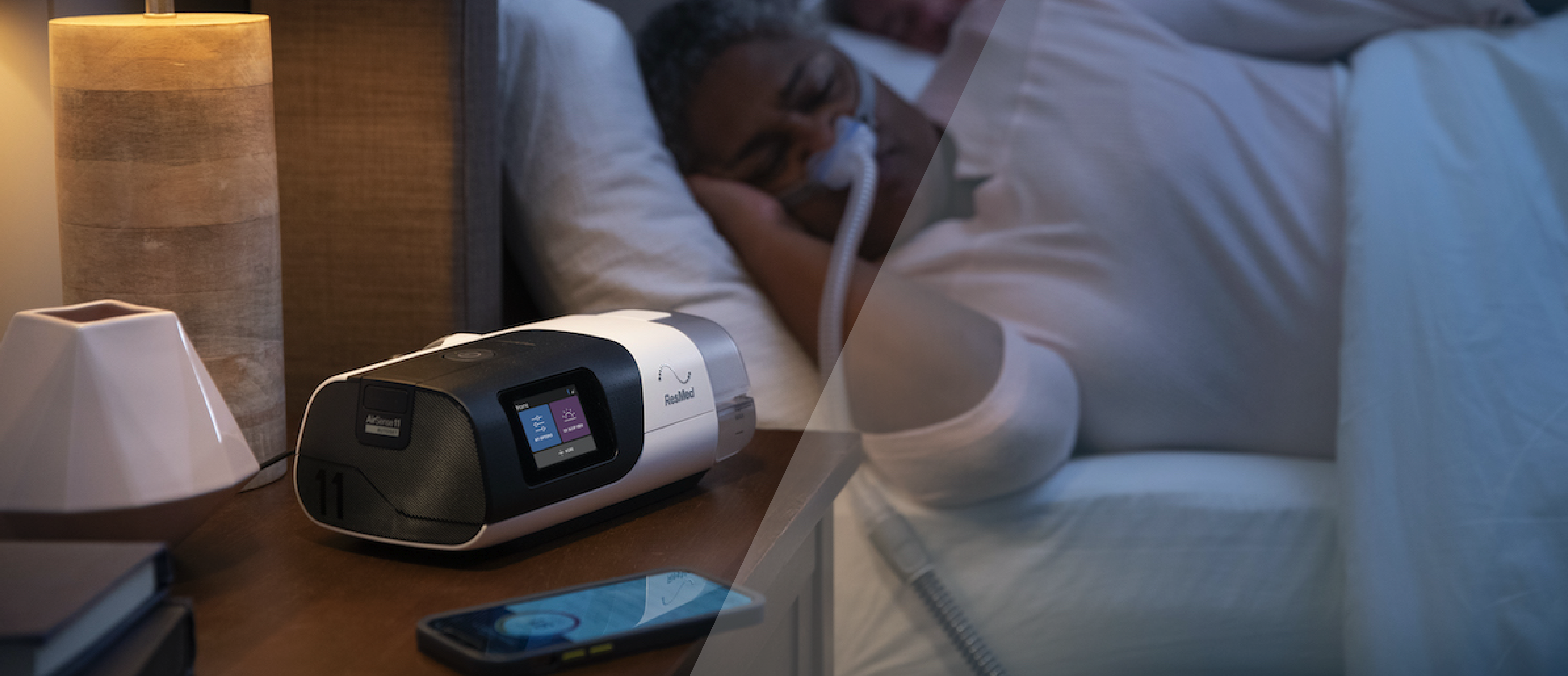
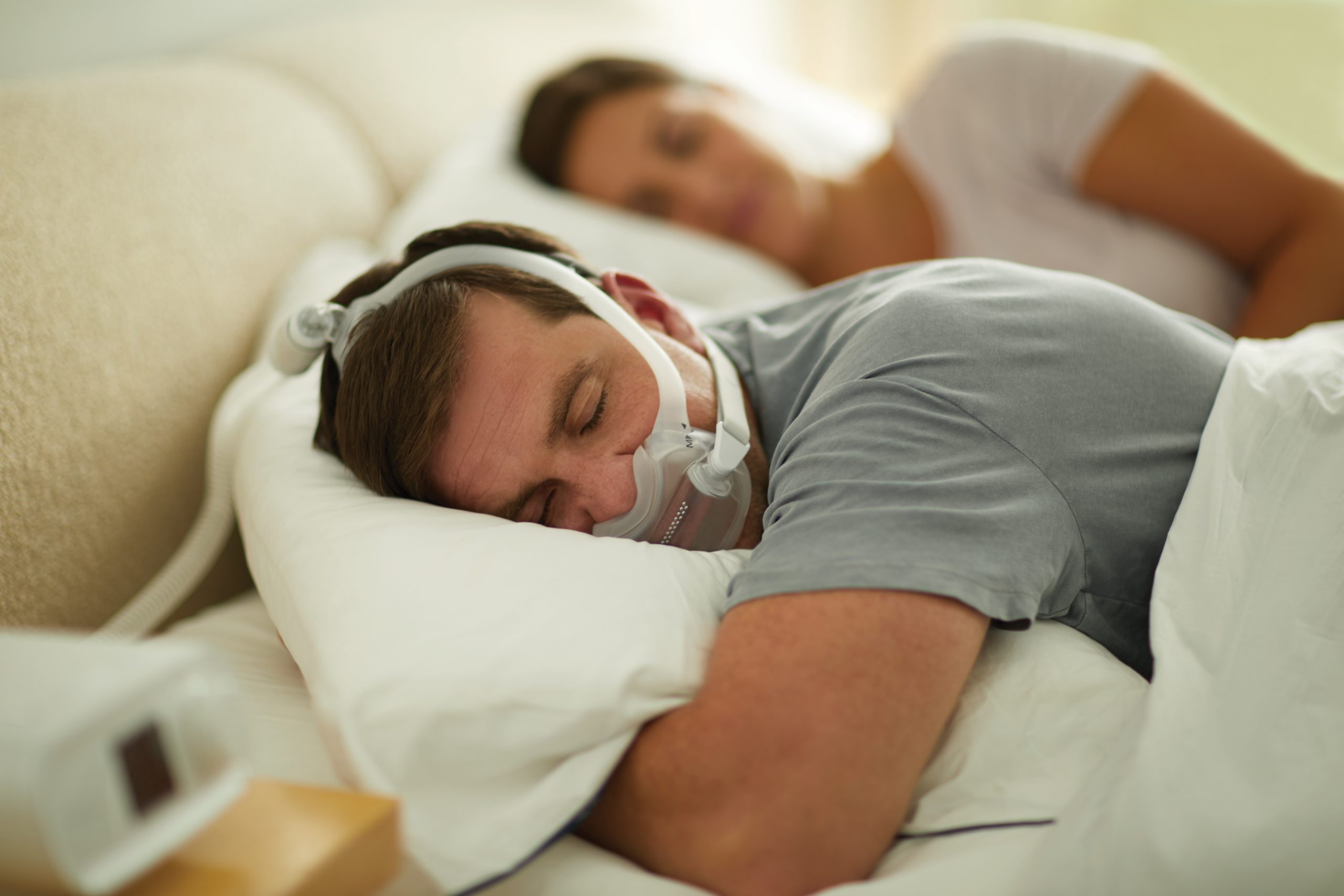
Your CPAP machine delivers pressurized air to keep your airway open during sleep. The pressure setting controls how much force that air carries. Getting this number right is essential.
If the pressure is too low, your therapy does not work. On the other hand, if it is too high, therapy becomes uncomfortable and harder to stay on. This guide explains what CPAP pressure settings mean, how your sleep specialist sets them, and what to do if yours does not feel right.
What Are CPAP Pressure Settings?
Clinicians measure CPAP pressure in centimetres of water pressure, written as cmH2O. Most patients receive a prescribed pressure somewhere between 4 and 20 cmH2O, and the average falls between 8 and 12.
Your sleep specialist sets your starting pressure based on your diagnosis. Specifically, they look at your Apnea-Hypopnea Index (AHI) and the severity of your airway obstruction.
Fixed CPAP, APAP, and BiPAP
A fixed CPAP machine delivers that same pressure all night. An APAP machine, by contrast, adjusts automatically within a prescribed range based on what your airway needs in real time. Meanwhile, BiPAP machines use two pressures: a higher one for inhalation and a lower one for exhalation.
How Your Pressure Setting Is Determined
Your pressure is not a guess. Instead, it comes directly from your diagnosis. The AHI counts how many breathing disruptions you have per hour, and a higher AHI typically requires a higher therapeutic pressure to keep the airway consistently open.
For patients on APAP therapy, the device also collects detailed data during the trial period. Your clinical care team then reviews that data and fine-tunes your pressure range accordingly.
At CPAP Central, this review happens remotely through cellular monitoring built into your device. As a result, adjustments can happen without an in-store visit.
Common CPAP Pressure Ranges
The table below shows how CPAP pressure settings typically line up with sleep apnea severity.
| Pressure Range (cmH2O) | Typical Use |
|---|---|
| 4 to 8 | Mild sleep apnea, lower pressure needs |
| 8 to 12 | Moderate sleep apnea, most common range |
| 12 to 16 | More severe OSA or higher pressure requirements |
| 16 to 20 | Severe OSA, sometimes BiPAP is prescribed instead |
Signs Your CPAP Pressure Settings May Need Adjusting
Your prescribed pressure is a starting point. In many cases, it needs refinement as you settle into therapy. Watch for these signs that an adjustment could help:
- Waking up unrested despite wearing your mask all night.
- A persistently high AHI or significant leak rate in your device data.
- Feeling like you are fighting the airflow when you try to exhale.
- Aerophagia (swallowing air), which causes bloating or discomfort.
- Frequently waking up with the mask off and no memory of removing it.
None of these signs mean your therapy is failing. Rather, they suggest your pressure may need a review. Do not adjust your pressure setting yourself without first speaking to your sleep specialist or CPAP provider.
Can I Adjust My Own CPAP Pressure?
Technically, most CPAP machines have a clinician menu that allows pressure changes. However, we do not recommend adjusting your own CPAP pressure settings without clinical guidance.
Your sleep specialist sets your pressure based on your diagnosis. Increasing it arbitrarily can cause new problems, including aerophagia and central apnea events. Similarly, decreasing it may leave your airway unprotected during sleep.
If you feel your current pressure is not working, the right step is to contact your CPAP provider. At CPAP Central, our clinical care team monitors therapy data remotely. In fact, they can make evidence-based adjustments while you are on the phone.
You can also review common therapy questions on our FAQ page or contact us directly.
APAP vs Fixed Pressure: Which Is Better?
For many patients, an APAP machine removes the pressure adjustment question entirely. Because it responds to your airway in real time, it delivers the minimum pressure needed at any given moment.
This tends to improve comfort, particularly during the early weeks of therapy while your body adjusts.
That said, APAP is not appropriate for everyone. For example, patients with central sleep apnea or complex sleep apnea syndrome typically need a fixed BiPAP prescription. Ultimately, your sleep specialist will recommend the right device type based on your diagnosis.
Ramp Settings and Pressure Relief Features
Most modern CPAP machines include comfort features that make the prescribed pressure easier to tolerate.
Ramp
The ramp feature starts therapy at a lower pressure. It then gradually increases to your prescribed level over a set period, typically 20 to 45 minutes. This allows you to fall asleep before the full pressure kicks in.
Pressure Relief
Pressure relief features reduce pressure slightly during exhalation. Examples include EPR on ResMed devices and Flex on Philips Respironics machines. As a result, breathing feels more natural without compromising therapy effectiveness.
Your clinical care team can adjust both features.
Get Your CPAP Pressure Settings Reviewed at CPAP Central
CPAP Central offers remote therapy monitoring across all four Ontario locations. If your therapy data suggests a pressure change, our team can make that adjustment without an in-store visit.
We serve patients in Hamilton, Georgetown, Kanata/Ottawa, and Stouffville. Contact us to book a therapy review or ask about remote monitoring.