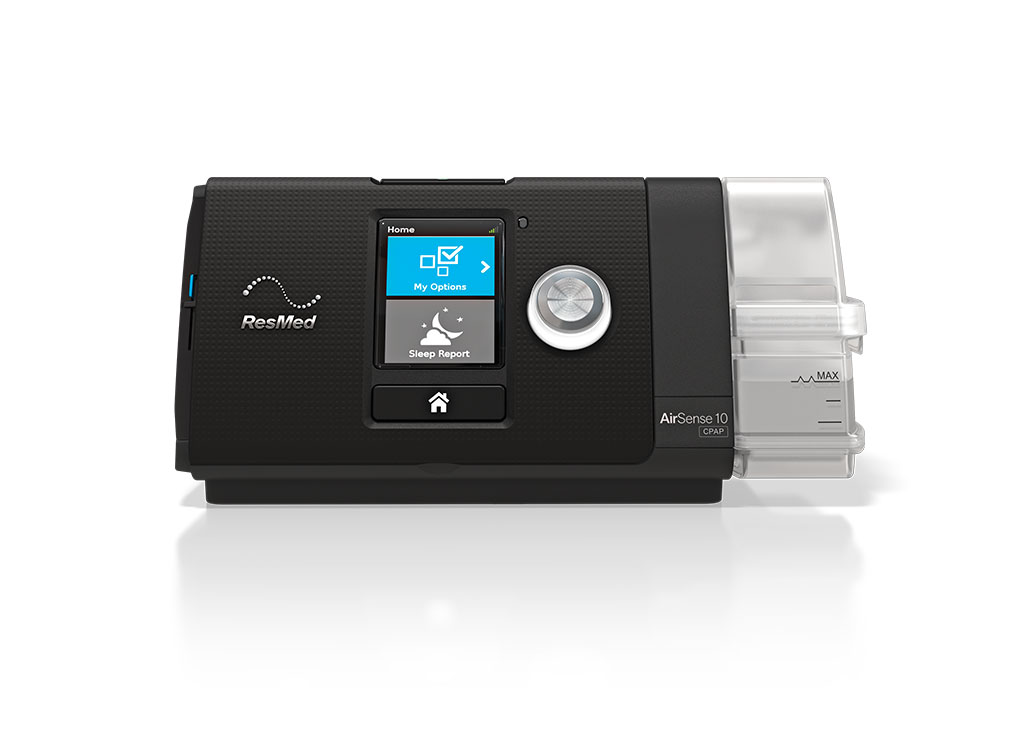
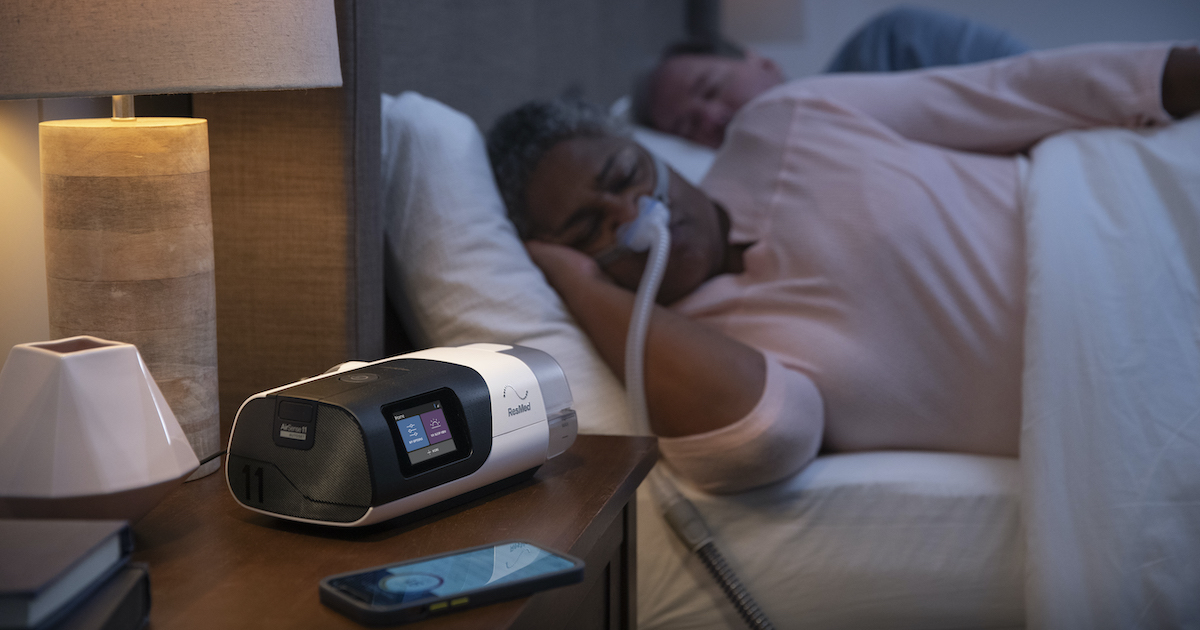
Whether to keep using CPAP while you have a cold is a decision to make with your care team. There is no single rule that fits everyone. ResMed’s AirSense 11 user guide notes that an acute upper respiratory tract infection may require temporary discontinuation of treatment, and it asks users to report unusual chest pain, severe headache or increased breathlessness to their prescribing doctor. Your team knows your diagnosis and history, so a quick call when you get sick is the sensible first step. For general background on how CPAP treatment works, see our treatment page.
What a cold can change at night
Congestion narrows the nasal passages and makes breathing through your nose harder. How much that matters depends on the mask you use.
Nasal masks and nasal pillow masks send air in through the nose. With a blocked nose, you may find yourself breathing through your mouth during sleep without realising it. With a nasal interface, that lets air escape through the mouth. This is called a mouth leak, and it is a different problem from a cushion that has lost its seal against your face. You might wake with a very dry mouth, hear airflow from your mouth, or see your app report more leaks than usual.
Full face masks cover both the nose and mouth, so breathing through the mouth does not create the same escape route. Some people who usually wear a nasal interface ask their care team about a full face mask as a backup. If that interests you, raise it before the cold season so any change can be fitted and checked properly.
A cold can also leave your nose and throat feeling dry or irritated, and discomfort alone can make it harder to keep the mask on through the night. Coughing or sneezing can also shift the mask. If that happens, reseat it the way your mask guide shows before reaching for the straps.
What to mention when you call your care team
A short, specific description helps your team give you useful advice quickly. Before you call, note:
- which mask you use and whether it is staying on through the night
- how long you have been unwell and how you are feeling now
- whether you are managing to use therapy at all, and for roughly how long each night
- any symptoms beyond a typical cold, such as fever, chest discomfort or breathlessness
- what your app or device is showing, if you track it
From there you can ask the questions that matter to you. Should I keep using therapy as usual, or pause for now? Is a different mask worth trying while I am congested? Is there a comfort setting you would like me to change?
Comfort settings your device may allow
Humidity is a comfort setting on many machines, and your device guide explains how to change it. The AirSense 11 guide suggests turning the humidity level up for a dry or blocked nose and turning it down if moisture builds up in the mask. Make small changes, one at a time, and watch for water collecting in the tubing, which can happen when humidity rises in a cool room. If your machine has a different control layout, follow its own guide.
Some people use saline nasal sprays to ease congestion before bed. A pharmacist can tell you whether a particular product suits you and any medications you take.
Two limits must stay in place, however you feel. Leave your prescribed pressure settings to your treating team, and keep your mask vents uncovered at all times so exhaled air can escape.
Keeping your equipment clean while you are sick
Follow the cleaning method and schedule in the user guide for each component, plus any extra instructions your care team gives you. Mask cleaning steps are in your mask’s own guide and vary between models and cushion materials. For machines, the AirSense 11 guide lists daily emptying and wiping of the humidifier tub and weekly washing of the tub and tubing in warm water with mild dishwashing liquid. ResMed’s cleaning page covers its components in more detail.
The same AirSense 11 guide cautions against bleach, chlorine, aromatic solutions, moisturising or antibacterial soaps and scented oils on the device, tub and tubing, because they can damage the parts. When you feel unwell it is tempting to reach for something stronger, so this is worth remembering. Keep your equipment to yourself, too; sharing it is never a good idea.
A simple record while you recover
Brief notes make any follow-up conversation easier. A few lines each morning are enough. Here is a hypothetical example:
- Monday: blocked nose, nasal pillows, took mask off around 2 a.m., app flagged a high leak.
- Tuesday: called care team, raised humidity one step as advised, slept through until 5 a.m.
- Thursday: congestion easing, mask on all night, dry mouth gone.
Once you feel better, return any comfort settings you changed to the levels you and your team agreed on. If your comfort or readings do not settle back to normal, mention it at your next contact with the team rather than guessing at the cause.
Planning ahead for the next cold
Colds come around every year, so it helps to have a plan before you need one. At a routine appointment, ask your care team what they would like you to do the next time you are congested. Find out whether they want a call as soon as symptoms start, and which symptoms should prompt a call right away.
A few practical steps make a sick week easier:
- Keep your care team’s phone number somewhere easy to find, not just in an email.
- If your team suggests a backup mask, have it fitted while you are well so you know how it feels.
- Keep a spare cushion or filter on hand if your supply schedule allows, so a worn part is not one more problem during a rough week.
Our FAQ page answers other general questions about CPAP supplies and therapy.
Getting help from CPAP Central
CPAP Central can help with the equipment side of a cold: mask questions, humidifier parts and setup checks. Clinical decisions about continuing or pausing therapy stay with your treating team. Reach us through our contact page or visit one of our stores listed on the locations page.