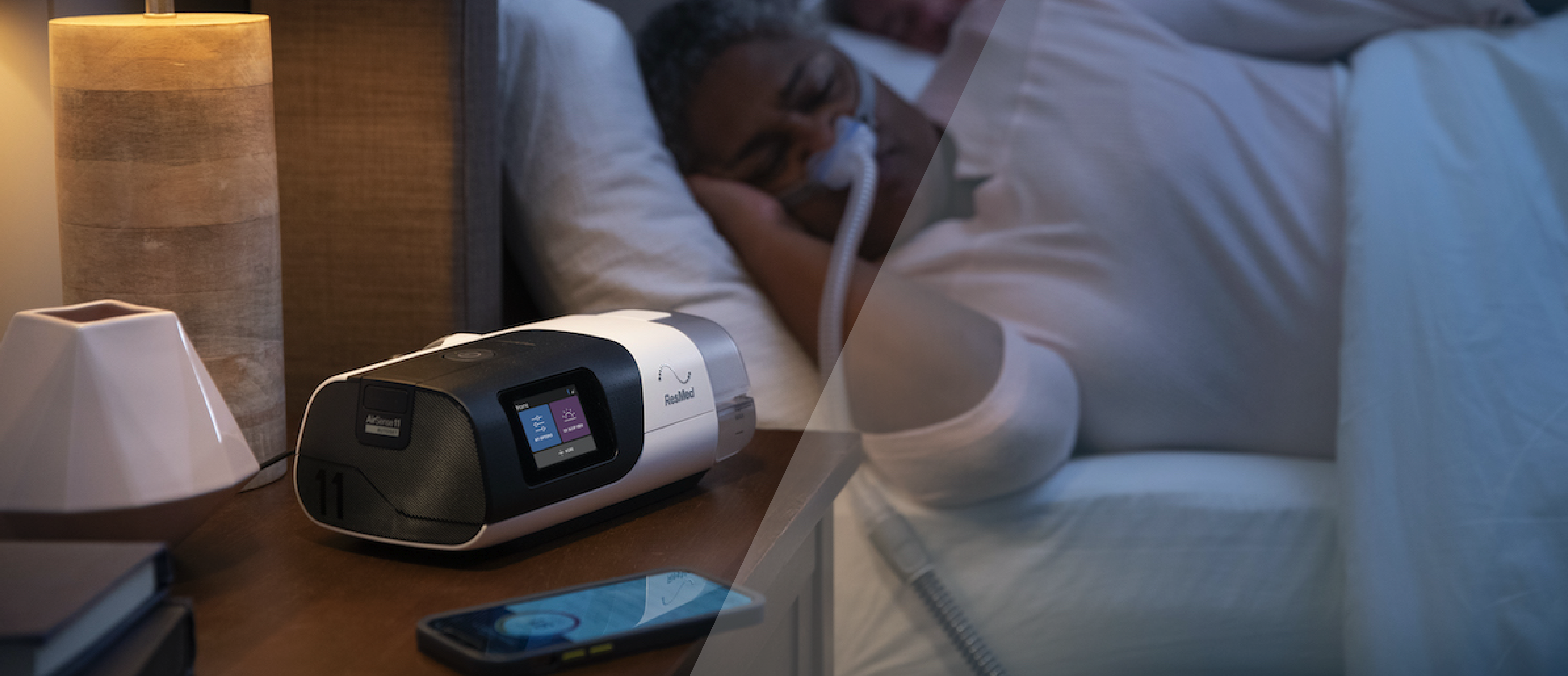
Your CPAP mask is just as important as your machine. An ill-fitting mask causes air leaks, pressure loss, skin irritation, and poor sleep. Consequently, many patients who struggle with CPAP therapy are actually dealing with the wrong mask type, not the wrong pressure setting. This guide explains the main mask categories, who each type suits best, and how to approach your fitting.
The Three Main CPAP Mask Types
| Mask Type | Covers | Best For |
|---|---|---|
| Full Face Mask | Nose and mouth | Mouth breathers, high pressure settings, congestion |
| Nasal Mask | Nose only | Active sleepers, lower pressure, natural feel |
| Nasal Pillow Mask | Nostril cushions only | Claustrophobia, glasses wearers, minimal contact |
Full Face Masks
Full face masks seal over both the nose and mouth. They are the most common choice for mouth breathers, since breathing through your mouth while wearing a nasal-only mask breaks the seal and reduces therapy effectiveness. Full face masks are also preferred when higher pressure settings are required, as they distribute airflow more evenly.
The ResMed AirFit F40, available through CPAP Central’s products page, is a full face mask with a minimal-contact design. It seals under the nose rather than over the bridge, which reduces pressure on the face and improves comfort for side sleepers. Additionally, it leaves the line of sight clear, making it compatible with reading glasses.
Nasal Masks
Nasal masks cover the nose only and form a seal around the nose cushion. They tend to feel less intrusive than full face masks and work well for patients who breathe through their nose naturally during sleep. They also accommodate a wider range of head shapes and are generally easier to adjust.
However, nasal masks are not suitable for mouth breathers unless paired with a chin strap to keep the mouth closed. Nasal congestion from allergies or a cold can also make them temporarily ineffective.
Nasal Pillow Masks
Nasal pillow masks use small cushioned inserts that sit at the entrance of the nostrils rather than sealing over the nose. They are the most minimal option available and are popular among patients who feel claustrophobic with larger masks. They are also an excellent choice for people who wear glasses, read before sleep, or sleep on their stomach.
The trade-off is that nasal pillows can cause discomfort at higher pressure settings, as the direct nostril seal delivers airflow more intensely. They are generally better suited to lower and mid-range pressure prescriptions.
Example: Philips DreamWear Under Nose
The Philips DreamWear Under Nose mask, available through CPAP Central, takes a hybrid approach. The cushion sits under the nose rather than directly over it, creating a seal without covering the nose entirely. This design combines the minimal-contact feel of a nasal pillow with the stability of a nasal mask. View it alongside other mask options on our products page.
How to Choose the Right Mask for You
Consider Your Breathing Pattern
If you breathe through your mouth during sleep, start with a full face mask. If you breathe through your nose consistently, a nasal or nasal pillow mask will likely be more comfortable.
Consider Your Sleep Position
Side sleepers often prefer nasal pillow or minimal-contact full face designs since bulkier masks can shift during the night. Stomach sleepers typically do best with nasal pillow masks.
Consider Your Pressure Setting
Higher prescribed pressures generally require a more robust seal. Full face and nasal masks handle high pressures better than nasal pillows. Your sleep specialist or CPAP technician will advise based on your prescription.
Consider Comfort and Claustrophobia
If you find mask coverage overwhelming, start with a nasal pillow. Most patients adjust over time, but comfort in the early weeks of therapy has a direct impact on compliance.
The Importance of a Proper Mask Fit
Even the best mask delivers poor results without a proper fit. At CPAP Central, every patient receives a mask fitting appointment before leaving with their device. Our clinical care specialists try different cushion sizes and adjust headgear to eliminate leaks. We also follow up during your trial period to address any fit issues that arise at home. Review common mask questions on our FAQ page or contact us to book a fitting.
Book a Mask Fitting at CPAP Central
CPAP Central carries a full range of masks from ResMed, Philips, and Fisher & Paykel across our locations in Hamilton, Georgetown, Ottawa, Barrhaven, Stouffville, and Cambridge. If your current mask is causing discomfort, leaks, or skin irritation, book a refitting appointment through our contact page.