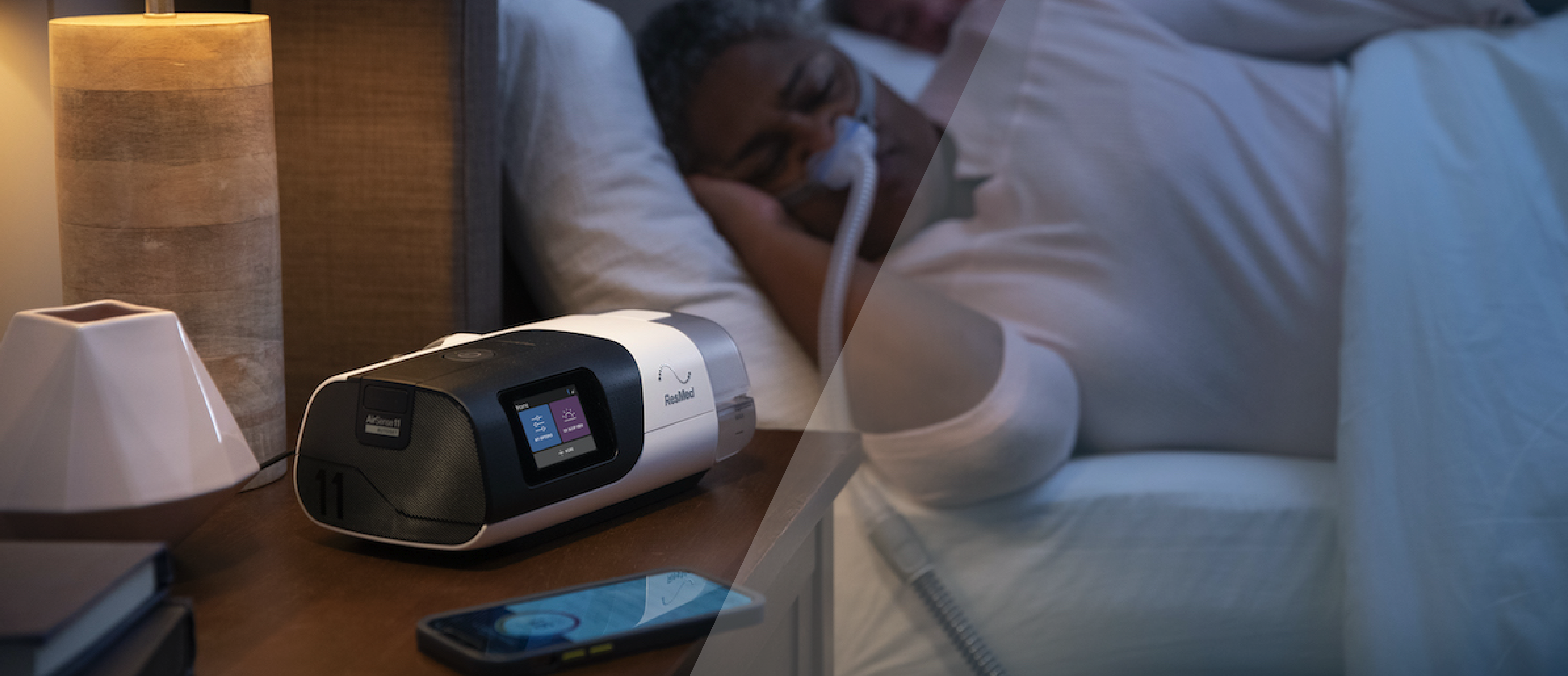
If your sleep specialist has prescribed a BiPAP machine, you may have questions about how it differs from a standard CPAP and what to expect from therapy. BiPAP devices serve a specific group of patients whose breathing needs go beyond what a fixed-pressure CPAP can address. This guide explains how BiPAP works, who it is prescribed for, and what to consider when choosing a device.
What Is a BiPAP Machine?
BiPAP stands for bilevel positive airway pressure. Unlike a standard CPAP, which delivers a single continuous pressure throughout the night, a BiPAP alternates between two pressure levels. It delivers a higher pressure during inhalation and a lower pressure during exhalation. This bilevel approach makes breathing feel more natural, particularly for patients who require higher pressures to keep their airway open.
How BiPAP Differs from CPAP
| Feature | CPAP | BiPAP |
|---|---|---|
| Pressure delivery | Single fixed pressure | Two pressures: IPAP and EPAP |
| Breathing comfort | Standard | Easier exhalation at high pressures |
| Typical prescription | Mild to moderate OSA | Complex OSA, high pressure needs |
| ADP grant (Ontario) | $415.50 | $712.50 |
| Cost | Lower | Higher |
Who Is Prescribed a BiPAP?
Your sleep specialist determines whether you need a BiPAP based on your sleep study results and medical history. BiPAP is typically prescribed in the following situations.
- Your required CPAP pressure is high enough that exhaling against it causes significant discomfort.
- You have been diagnosed with central sleep apnea or complex sleep apnea syndrome.
- You have a co-existing respiratory condition such as COPD or congestive heart failure.
- You have tried CPAP therapy and been unable to tolerate it due to exhalation pressure difficulty.
Notably, BiPAP is not simply a more advanced version of CPAP. It is a different device for a different clinical need. If you are unsure whether BiPAP is appropriate, speak with your sleep specialist. You can also find answers to common therapy questions on our FAQ page.
Understanding IPAP and EPAP
BiPAP devices have two pressure settings. IPAP, or inspiratory positive airway pressure, is the pressure delivered during inhalation. EPAP, or expiratory positive airway pressure, is the lower pressure during exhalation. Your sleep specialist sets both values based on your diagnostic results.
The difference between IPAP and EPAP is called pressure support. A higher pressure support level means a greater reduction in pressure during exhalation. Consequently, patients who struggle most with standard CPAP often experience significant relief once they switch to bilevel therapy.
The ResMed AirCurve
CPAP Central carries the ResMed AirCurve, a bilevel therapy device designed for patients prescribed BiPAP. The AirCurve includes an integrated heated humidifier, advanced event detection, and cellular connectivity for remote monitoring. This means our clinical care team can review your therapy data between appointments and make adjustments without requiring a clinic visit. View it on our products page.
BiPAP Masks
BiPAP therapy uses the same masks as CPAP. Full face masks are commonly used with BiPAP, particularly for patients on higher pressure settings. Your clinical care specialist at CPAP Central will conduct a mask fitting to ensure the right seal and comfort. Browse available masks on our products page or read our guide to CPAP mask types for more detail.
ADP Funding for BiPAP in Ontario
Ontario residents with a valid BiPAP prescription qualify for an ADP grant of $712.50 toward their device. CPAP Central is an authorized ADP vendor. Our funding team handles the application and direct billing with your private insurer. Submit our insurance pre-approval form to get the process started before your appointment.
What to Expect During Your Trial Period
As with CPAP, BiPAP therapy involves a trial period during which you adjust to the device and settings. At CPAP Central, we follow up with you throughout this phase to address comfort concerns, adjust mask fit, and review your therapy data remotely. Most patients adapt to BiPAP within two to four weeks.
Book a BiPAP Consultation at CPAP Central
Ask your sleep specialist to refer you to CPAP Central, or contact any of our locations in Hamilton, Georgetown, Ottawa, Stouffville, or Cambridge to book your device fitting and setup appointment.